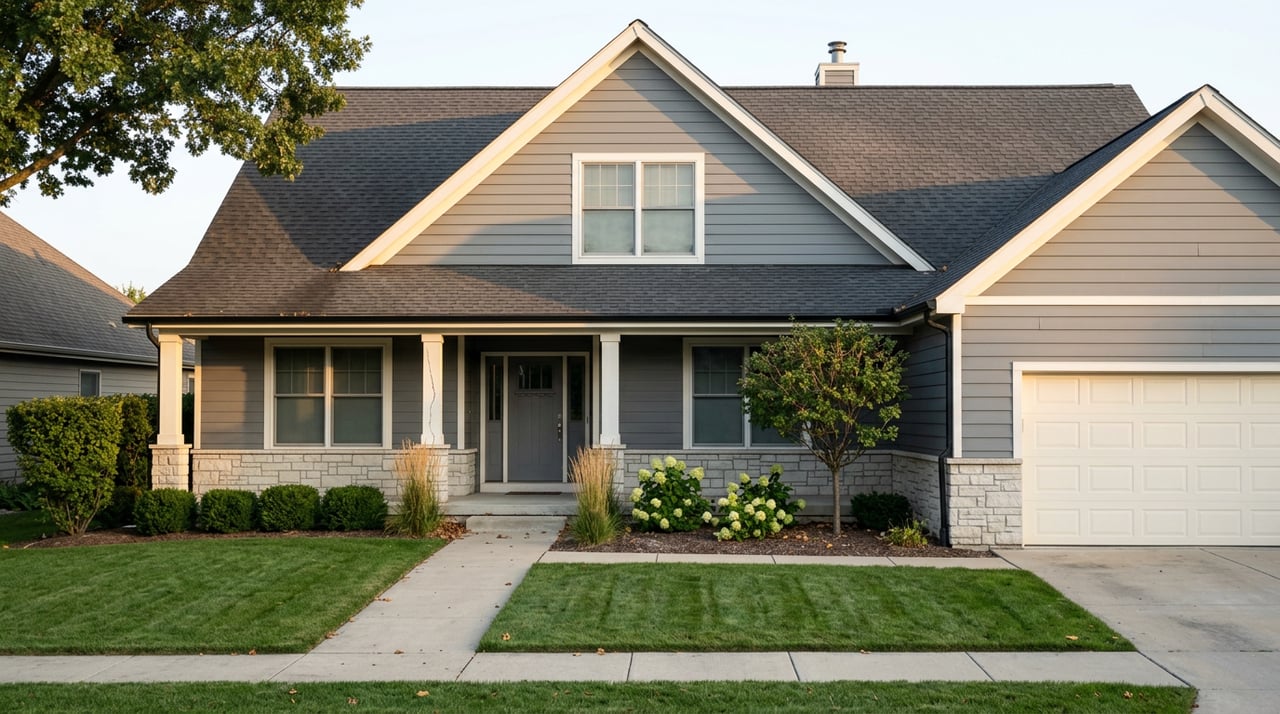
Selling a Historic Home Near Downtown Pontiac? Here's the Paperwork Nobody Warns You About
September 10, 2026
September 10, 2026
Does that Queen Anne on one of Pontiac's brick side streets come with a permission slip attached? Sellers ask us this more than almost any other question about older homes downtown, and the answer surprises most of them.
Pontiac's downtown-adjacent neighborhoods carry real architectural weight. The Jones House, a Gothic Revival home from the late 1850s, still stands as the oldest remaining brick house in the city, restored and opened to the public by appointment through the Livingston County Historical Society. A few blocks over, the Yost House, a Queen Anne built in 1898, now operates as the Catherine V. Yost Museum and Arts Center. The 1898 Rathbun Building anchors part of downtown's commercial row. Walk the square and you'll pass more than 20 murals painted in 2009 by the Walldogs, a traveling crew of sign and mural painters who turned blank brick walls into a public gallery of local history. Add the Illinois Route 66 Hall of Fame & Museum, the swinging bridge at Humiston-Riverside Park, and the brick streets that still run through downtown, and you get a downtown that reads as genuinely old rather than staged-old.
That authenticity is exactly why sellers assume there's a catch. If a house is old enough to matter historically, surely someone has to approve the new windows. Surely there's a form. There usually isn't, and the actual paperwork that does show up looks nothing like what most sellers picture.
The confusion starts with a distinction that gets flattened in casual conversation: the difference between a home being listed on the National Register of Historic Places and a home being designated a local landmark.
National Register listing is largely honorific. According to Landmarks Illinois, the statewide preservation advocacy group, that federal and state designation offers no protection to a property and doesn't restrict what an owner can do to it, unless the project uses federal funding. The Livingston County Courthouse, built in 1874 in the Second Empire style and listed on the National Register, benefits from that recognition without its private neighbors inheriting any renovation rules by proximity.
Actual restrictions on exterior changes only kick in when a municipality has adopted its own historic preservation ordinance and a specific property has been designated a local landmark or sits inside a local landmark district. Illinois' State Historic Preservation Office maintains records on which communities have that kind of ordinance in place. Unless a Pontiac seller's specific parcel carries that local designation, and most don't, there is no preservation commission reviewing a new roof or a repainted porch rail.
This is the reframe worth sitting with before you list. A downtown-adjacent Pontiac home being old, brick, and photogenic does not automatically mean a buyer inherits a review board. The paperwork that actually matters lives somewhere else entirely.
Illinois didn't always require sellers to say anything about a property's condition. According to Nolo, until 1994, sellers had no legal duty to volunteer information to buyers at all. The state closed that gap with the Residential Real Property Disclosure Act, and today every seller of residential property fills out the standard disclosure report unless a narrow exemption applies.
The standard is "known material defects," meaning anything the seller is actually aware of that affects the property's value, safety, or habitability. Sellers aren't required to go digging for problems or commission an inspection just to complete the form. But if a problem already surfaced in a prior inspection report and was never fixed, it has to be disclosed. And a buyer signing an "as is" contract doesn't waive that duty. Illinois law doesn't let sellers and buyers contract their way around it.
A separate federal disclosure may also apply.
Disclosure | Applies to | What it requires |
|---|---|---|
Illinois Residential Real Property Disclosure Report | Nearly all residential sales | Written disclosure of known material defects affecting value, health, or safety |
Neither form asks anything about historic designation, murals, or brick streets. They ask about the house itself.
Pontiac's brick construction downtown isn't incidental. A fire in 1870 destroyed much of the commercial district, and the rebuilding that followed came with stricter building codes, which is a large part of why so much of what survives from that era downtown is brick rather than frame. That construction history extends into the surrounding residential streets, where Victorian, Queen Anne, and Craftsman homes from the late 1800s and early 1900s still stand.
What an inspector finds in a house that age has less to do with historic status and more to do with ordinary systems aging out. Original wiring, sometimes knob-and-tube, sometimes early conduit, gets flagged for insurance and safety reasons regardless of whether the house has any historic designation at all. Original plumbing runs, brick foundation walls, and settled framing get noted the same way they would in any century-old home in any Illinois town. None of this is preservation-specific. It's just what a hundred-plus years of use looks like on paper.
The practical upside for sellers is that fixing or disclosing these issues doesn't require a preservation commission's sign-off. A new panel, updated plumbing, or a foundation repair on a downtown-adjacent Pontiac home follows the same permitting path as it would anywhere else in the city, because in the absence of local landmark status, it is anywhere else in the city.
None of this is theoretical. A Victorian currently on the market near downtown Pontiac is being marketed explicitly around its location on one of the city's historic brick streets, its late 19th century build, and its original woodwork and craftsmanship, right alongside a full list of practical updates: a remodeled bathroom, new water heater, new furnace and air conditioning. That combination, character plus documented maintenance, is what actually moves these homes. Buyers drawn to Pontiac's older housing stock want the wraparound porch and the stained glass. They also want a disclosure form that doesn't leave anything out and an inspection report that matches what they were told.
Sellers who treat the historic character as a selling point and the disclosure paperwork as non-negotiable tend to have an easier time than sellers who quietly worry that mentioning the home's age will invite scrutiny it doesn't need. The scrutiny that matters is the ordinary kind: what's disclosed, what's inspected, and whether the seller answered honestly. The Jones House and the Yost House earned their protection through restoration and public stewardship, not through blanket rules that follow every old house in town.
Do I need permission to replace windows or repaint the porch on an older Pontiac home? Only if that specific property has been designated a local landmark under a municipal preservation ordinance. National Register listing alone, which several downtown Pontiac structures carry, doesn't require review of exterior changes to a private residence.
Will buyers assume an old house has more problems than it does? Some will ask more questions, which is normal. A clean disclosure form and a recent inspection report answer most of those questions before they turn into hesitation.
If you're weighing what to disclose, what to fix first, and what a downtown-adjacent Pontiac home is actually worth to the right buyer, that's a conversation worth having before the sign goes in the yard. Chismarick Realty, LLC has spent years working through exactly these details with sellers. Contact us when you're ready to talk through your specific property.
This article is general information, not legal, tax or financial advice. Consult a qualified professional about your situation.
Stay up to date on the latest real estate trends.
Connect with real estate professionals who value trust, insight, and personal attention. Every step is guided by a deep understanding of what “home” truly means.