Understanding Older Homes In Streator
July 2, 2026
July 2, 2026
Wondering whether an older home in Streator is a smart buy or a money pit? You are not alone. Many buyers are drawn to the charm, price point, and established feel of these homes, but they also want to avoid expensive surprises. This guide will help you understand what older homes in Streator often offer, what to watch for, and how to evaluate whether a property fits your budget and goals. Let’s dive in.
Older homes are a major part of Streator’s identity. The city’s downtown plan connects much of Streator’s residential character to growth that began in the 1880s and continued into the early 1900s, with a housing stock that still reflects that history today.
That matters because if you shop in Streator, you are not just looking at a few scattered historic houses. You are often looking at a market shaped by long-established homes, many with original details, mature lots, and varying levels of upkeep.
Streator also reads more like an established small-city housing market than a new-build suburb. For many buyers, that points to affordability, but not always move-in perfection.
When people say “older homes” in Streator, they can mean a wide range of properties. Local examples include homes from the 1880s as well as houses from the 1930s, so your search may include late-19th-century homes, early-20th-century houses, and interwar-era properties.
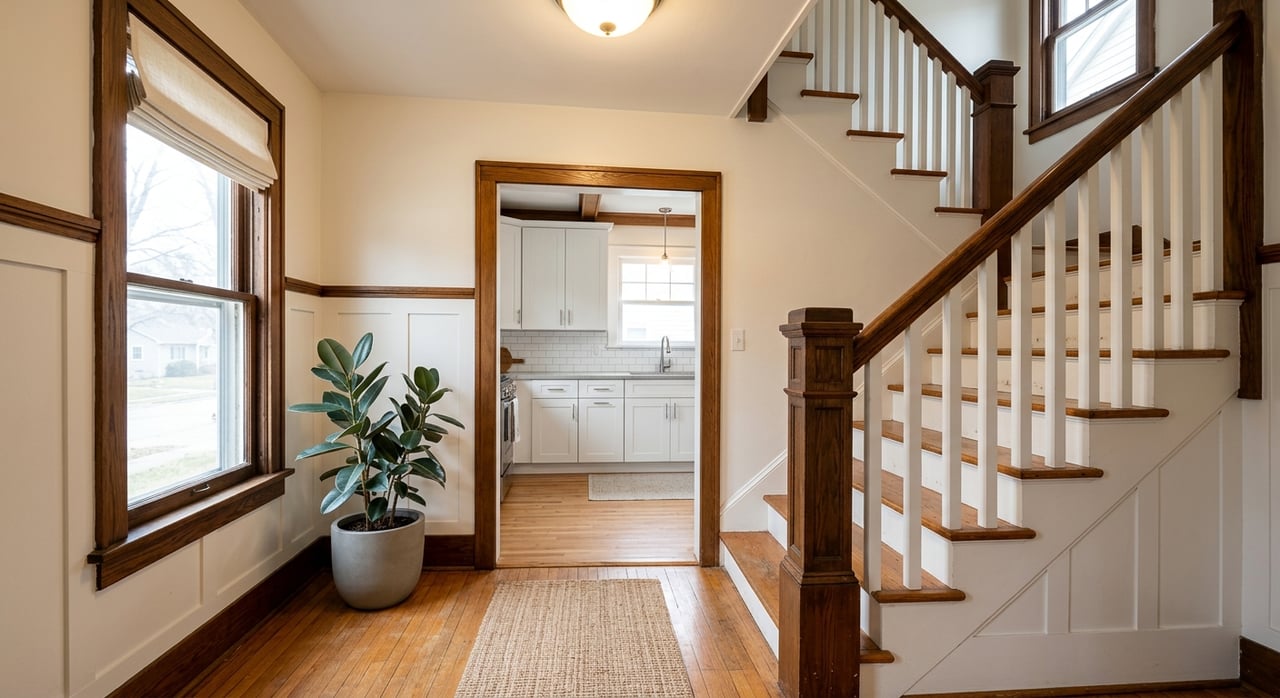
These homes often come with very different layouts than newer construction. Instead of one large open living area, you may find more separated rooms, formal dining spaces, sunrooms, or compact upper-level bedrooms.
Some older homes fall into recognizable architectural forms. Queen Anne homes often feature asymmetrical designs, wraparound porches, and mixed materials, while bungalow or Craftsman homes often have broad porches, low-pitched rooflines, and one to one-and-a-half stories.
You do not need to memorize style labels to shop smart. Still, it helps to know that the look and layout of an older Streator home often reflect the era when it was built, and that can affect everything from daily function to renovation plans.
An older home can keep its character while still offering modern updates. Local examples show that features like formal dining rooms and porches can coexist with updated kitchens and more current living spaces.
That is good news if you want a home with personality but do not want every project to start from scratch. The key is learning how to separate cosmetic charm from true condition.
For many Streator buyers, the appeal comes down to character and value. Older homes may offer details that are harder to find in newer housing, and the local price point can make them attractive to first-time or budget-conscious buyers.
At the same time, lower purchase prices do not always mean lower total cost. If a home needs repairs, updates, or renovation work, your actual investment may be much higher than the list price suggests.
That is why it helps to think in two numbers:
If you focus only on the first number, you may miss the real budget picture.
Older homes are not automatically problematic, but they do deserve a closer look. In Streator, where some homes still need repair, buyers should treat condition review as a key part of the decision.
If a home was built before 1978, or if the build date is unknown, Illinois Department of Public Health guidance says you should assume lead may be present. That does not mean the home is unlivable, but it does mean you should plan carefully before any renovation or repair that disturbs painted surfaces.
Federal lead disclosure rules also apply to most pre-1978 housing. Sellers must disclose known lead information, provide the required pamphlet, and buyers must be given a 10-day opportunity to test for lead hazards.
Lead matters most when paint is disturbed and creates dust or debris. EPA renovation rules require certified contractors and lead-safe practices for certain work in pre-1978 homes.
Moisture can be a quiet but important issue in older homes. According to Illinois Department of Public Health guidance, dampness can cause paint to peel, chip, or crack. In a pre-1978 home, that can increase the risk of lead dust indoors.
If you notice water staining, musty smells, bubbling paint, or signs of long-term dampness, that is worth extra attention. These clues may point to repair needs that affect both comfort and cost.
Streator’s older housing stock can include homes with deferred maintenance. That does not mean every house is a major project, but it does mean you should expect a range of conditions from updated and well-kept to fixer-upper.
A home that looks affordable at first glance may still need work on systems, finishes, or structural elements. The goal is not to avoid every imperfect house. The goal is to understand what you are taking on.
The best way to approach an older home is with clear eyes and professional help. A good buying decision is not about guessing whether the house will be “fine.” It is about understanding likely near-term costs and deciding whether they fit your plans.
Consumer guidance recommends scheduling an independent home inspection as soon as possible. An inspection is different from an appraisal, and depending on your contract terms, inspection findings may give you room to negotiate repairs or even walk away.
For an older home, think of the inspection as a risk-management tool. You are not just asking whether the home passes or fails. You are asking what the house may need soon, what can wait, and what could strain your budget after closing.
During your review period, focus on questions like these:
These questions can help you compare homes more realistically. A cheaper house is not always the better deal if it needs major work early on.
If you are planning updates, local rules matter. Streator’s municipal code includes building permit requirements along with residential, property maintenance, and existing building code provisions.
The city’s permit application shows that categories such as new buildings, additions, alterations, repair or replacement work, and moving a building can require permit review. If a home needs work, part of your planning should include checking what the city may require before projects begin.
One thing buyers sometimes overlook is how an older floor plan feels once you move in. Many homes from the late 1800s through the 1930s were designed for a different style of living than today’s open-concept homes.
That can be a positive if you like defined rooms, dining spaces, enclosed porches, or a cozier feel. It can be a drawback if you want large sight lines, oversized closets, or a more modern flow.
There is no right answer here. The point is to match the home to how you actually live, not just how it looks in photos.
An older home in Streator may be a strong fit if you value charm, can handle some uncertainty, and want to make the most of the area’s relatively affordable housing market. It may also make sense if you are comfortable improving a home over time rather than expecting everything to be new on day one.
It may be less appealing if you need a turnkey property, have very little room in your budget for repairs, or do not want to deal with inspection follow-up, lead planning, or permit questions.
A smart purchase is not about buying the oldest house or the cheapest house. It is about buying the house that matches your comfort level, timeline, and finances.
In Streator, older homes are not the exception. They are part of the local market story. They can offer value, history, and distinct character, but they also ask you to look beyond the asking price and pay attention to condition, lead considerations, moisture issues, inspections, and local permit rules.
If you want steady, local guidance while comparing older homes in Streator, Chismarick Realty, LLC can help you sort through the details and move forward with confidence.
Stay up to date on the latest real estate trends.
Connect with real estate professionals who value trust, insight, and personal attention. Every step is guided by a deep understanding of what “home” truly means.